◆ Verification
Real vs Fake Muha Meds: The Batch, QR and Hardware Checks That Actually Work
· 10 min read
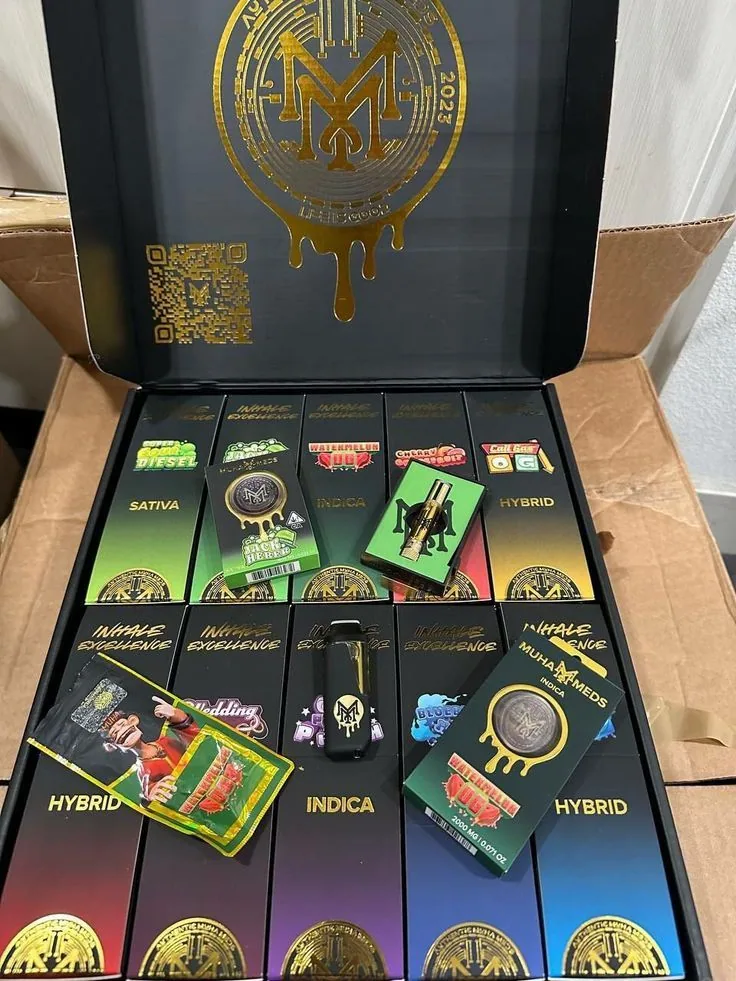
Muha Meds is one of the most counterfeited names in cannabis, which is the price of being one of the most recognised. Empty branded packaging is sold in bulk online, so the box in your hand proves nothing on its own — and neither, by itself, does a green tick on a verification page. What follows is the check in the order it is worth doing, including the two signals almost every guide leaves out.
The 60-second check
If you are standing in front of a purchase and need an answer now, this is the short version. The rest of the page is why each step works and what to do when one of them fails.
- Scan the QR code and look at where it lands. An official verification portal, or somewhere else entirely?
- Read the scan count, not just the tick. A first-time scan on a sealed box should be low. Dozens or hundreds of prior scans on something you just opened means the code has been copied onto a print run of fakes.
- Open the COA from the verification page and check the batch number on it matches the batch printed on the box. This is the step counterfeits fail most reliably.
- Check the flavour actually exists in the current lineup. Fakes routinely print strain names the brand has never produced.
- Handle the hardware. Weight, a mouthpiece that sits flush, a USB-C port with no play in it, an LED that responds instantly.
- Question the price. Genuine product has a floor. Far below it is not a deal.
The QR code and what the verification page really shows
Genuine packaging carries a QR code, and scanning it should land you on the brand's own verification portal — not a generic landing page, not a shop, not a page that simply says the word “authentic” in large text with nothing behind it. A page with nothing but a tick and no data is the easiest thing in this entire process for a counterfeiter to build.
What a real verification result contains
- A clear authentic/not-authentic result rather than a decorative badge.
- Batch information — the batch identifier, with production and expiry dates.
- Strain detail — the name, the potency figure and the terpene profile for that specific batch.
- A link to the third-party Certificate of Analysis for that batch, as a document you can open and read.
- A scan counter showing how many times this code has been checked before you.
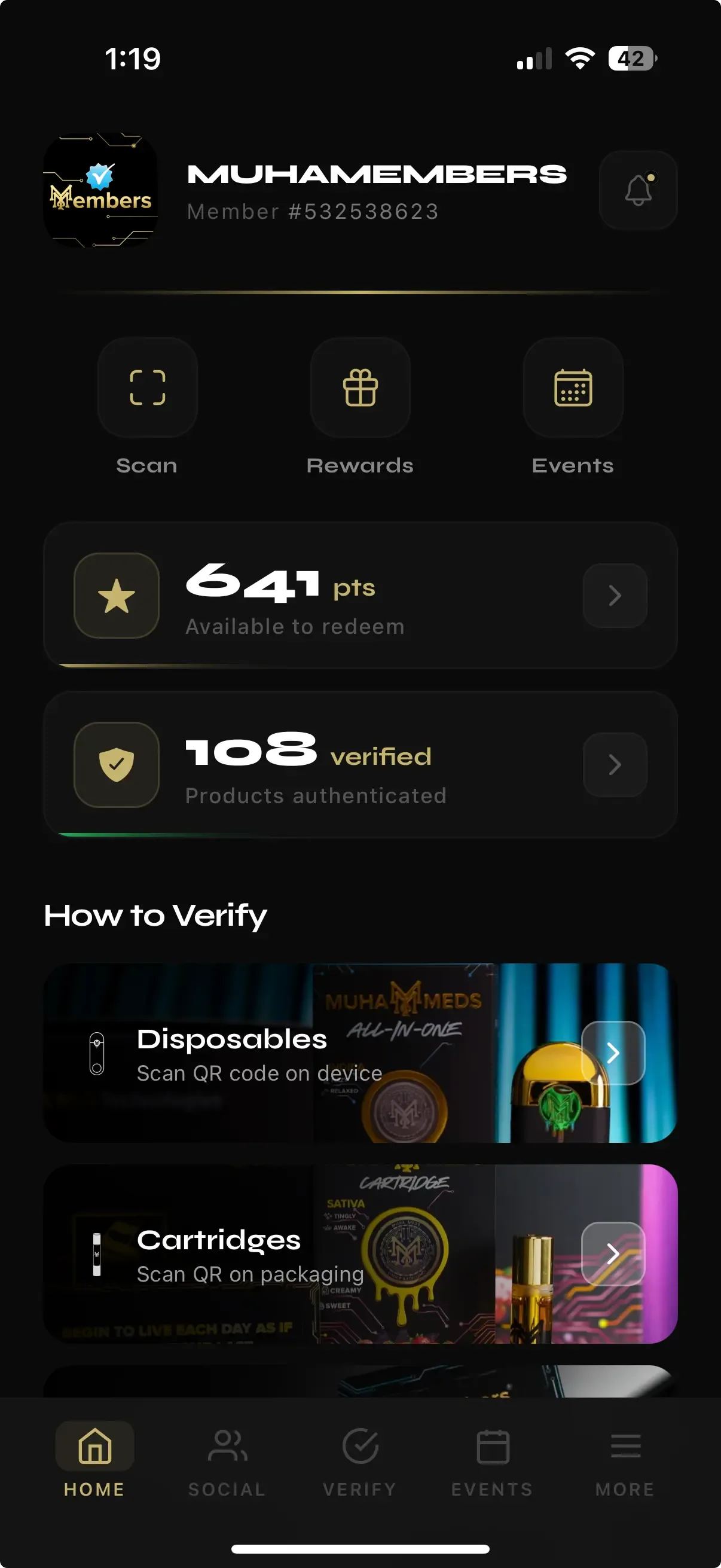
If any of those are missing — particularly the COA link and the scan counter — you are not looking at a verification system. You are looking at a page built to look like one.
The scan count: the red flag nobody explains
This is the single most useful signal on the whole page, and it is routinely skipped over in favour of the green tick above it. Here is why it matters.
A verification code is meant to be unique to one unit. Counterfeiters do not generate codes — they cannot, because they do not control the database. What they do instead is photograph one legitimate code and print it across an entire production run. That means every fake in that run shares a single code, and every one of those units, when scanned, reports back to the same record.
So the tick stays green — the code is real, it just is not *yours* — while the scan count climbs into the dozens, hundreds or thousands. On a box you opened yourself, that number should be low. A first scan on freshly-opened, sealed packaging showing three hundred previous scans is not a glitch, and it is not other people checking the same product in a shop. It is three hundred other people holding the same counterfeit.
Verify the right way for your generation
The verification method changed between hardware generations, and using the wrong one produces a failure that looks alarming but means nothing. Check which you are holding first.
| Generation | How to verify | Common false alarm |
|---|---|---|
| Gen 2 and earlier | Scratch the panel on the back of the box to reveal a code, then enter that code in the verification field on the site. | Scratching too hard and destroying part of the code, then reading a failure as a counterfeit. |
| Gen 3 | Scan the code with the brand's members app, which authenticates it against the batch record. | Scanning a Gen 3 code with a generic phone camera QR reader and getting a page that does not resolve properly. |
A scratch-off panel is itself a tell worth noting: it has to be intact and unscratched when you receive it. A panel already scratched, or a code visible without scratching anything, means either the unit has been handled or the packaging never had a real panel to begin with.
“Product not found” and “code already used”: what each one means
These two errors get treated as the same thing and they are not. One is usually a counterfeit and one frequently is not.
Product not found
The code you entered does not exist in the database at all. On a correctly-entered code from an unscratched panel, this is the strongest single indicator of a counterfeit you will get — the counterfeiter invented a code rather than copying one. Before concluding, rule out the boring explanations: a mistyped character, a zero read as the letter O, a partially destroyed scratch panel, or a regional product checked against the wrong portal.
Code already used
The code is genuine but has been redeemed before. Two very different things cause this. Either you are holding a duplicate from a counterfeit run — the scan-count problem above, and by far the more likely — or the unit was legitimately scanned before it reached you, which does happen with returns and display stock. The way to tell them apart is the rest of this page: check the COA batch match and the hardware. If those hold up, it is probably history. If they do not, it is a fake.
The code scans to somewhere strange
A QR that opens a shopping page, a social profile, a shortened link or anything that is not the verification portal is not a verification code at all. Counterfeiters use real QR generators pointed at whatever they like, and it costs them nothing.
The COA: the four sections that matter
Every guide tells you to check that a product is lab-tested. Almost none tell you what to read once you have the document open, which makes the advice close to useless — a counterfeiter can attach a PDF as easily as anyone else. Four things, in order of how hard they are to fake.
- The batch identifier and date. This is the one that catches fakes. The batch number printed on your box must match the batch number on the certificate, and the test date must sit sensibly before the production date. A COA for a different batch is not evidence about your unit — it is evidence about someone else's.
- Cannabinoid potency. Total THC/THCa, and the full cannabinoid breakdown. It should be a specific number from a named laboratory, not a round marketing figure. A COA claiming a suspiciously perfect number deserves a second look.
- Terpene profile. The terpenes present and their percentages. This is what should actually match the strain on the box — a profile that bears no relation to the advertised strain means the oil is not what the packaging says it is, whoever made it.
- Contaminant screening. Four panels, and you want all four: pesticides, heavy metals, residual solvents and microbials. Each should read as a pass against a stated limit. Missing panels are the point — a real lab runs them all; a fabricated certificate usually shows potency and stops there, because contaminant panels are tedious to invent convincingly.
Also look at the header: a real certificate names the laboratory, carries a licence or accreditation number, and gives a sample identifier. A document with a brand logo and no lab identity is a marketing sheet.
Batch code and date anatomy
Genuine packaging carries a batch number and dates that are part of the printed design, and they have to agree with each other and with the certificate. What you are checking for is coherence, and this is where fakes fall apart because a counterfeit run prints one set of numbers across thousands of units without regard for whether they make sense.
- The batch number on the box matches the batch number on the COA. Not similar. Matches.
- The production date sits before the expiry date, by a plausible shelf life rather than a decade.
- The lab test date sits before or around the production date — a batch cannot be tested before it exists, and it should not be tested years later.
- The print is part of the packaging artwork, not a sticker, not an inkjet overprint, and not smudged or misaligned.
- Two units bought separately, weeks apart, should not carry identical batch numbers. If they do, at least one is from a copied print run.
Packaging tells
Empty branded boxes are sold in bulk, so packaging alone never proves authenticity. It does still disprove it — counterfeit printing is where cost is cut first, and the failures are consistent.
- Print sharpness. Genuine text is crisp at the smallest sizes. Counterfeit print is soft at the edges, especially in fine print and legal text, because it has been scanned from an original and reprinted.
- Colour. Copies drift — a shade too dark, too warm, or slightly off on the logo. Side by side with a genuine box this is obvious; alone it takes a careful eye.
- Spelling and grammar. Read the small print, not the front. Warning text and legal copy are where the errors live.
- Alignment. Logos and panels that sit a millimetre out, seams that do not meet, laminate that lifts at the corners.
- Holograms and foils. Genuine foil shifts cleanly as you tilt it. Counterfeit foil is flat, dull, or a printed imitation of a hologram that does not move at all.
- Tamper seals. Present, intact, and part of the packaging design. A box that arrives unsealed is a box someone has been inside.
Hardware and oil tells
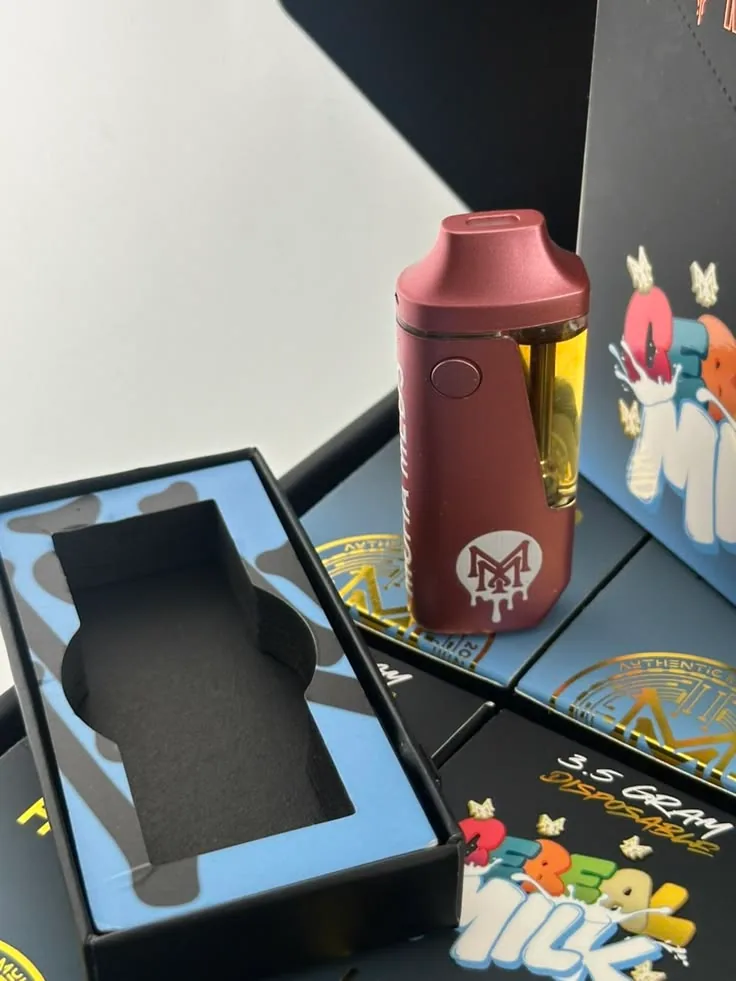
Packaging can be copied cheaply. Hardware cannot — a counterfeit run has to hit a price, and the money comes out of the cell, the coil and the tolerances. This is where a fake is hardest to hide.
In the hand
- Weight. Genuine hardware has heft. Counterfeits feel hollow and light, because a smaller cell is the easiest saving to make.
- The mouthpiece sits flush, with no rocking, no gap and no visible adhesive. Glue at a seam is a counterfeit signature.
- The USB-C port has no play in it. A cable that wobbles in the socket means a loose, cheaply-mounted board.
- The LED responds instantly to a draw or a plug, cleanly, without flicker or delay.
- Threading on 510 carts turns smoothly and seats square. Grinding or cross-threading means loose machining tolerances.
- Glass and metal, cleanly finished. Rough edges, misaligned components or a cart that looks assembled by hand are all bad signs.
The oil
- Genuine oil runs from golden to light amber, and it is clear — you can see through it.
- Very dark, cloudy or opaque oil in something newly bought points to a poor extraction or an old one.
- Separation — a distinct layer or a watery band — means the oil has been cut with something that will not stay mixed.
- Oil that moves like water is thinned. Genuine extract is viscous; tilt the cart and the bubble should climb slowly.
- A harsh chemical taste, or a burn at the back of the throat from the first draw on a clean coil, is a fair sign of an additive that should not be there.
The price signal
Extraction, testing, compliant packaging and licensed distribution all cost money, and they set a floor under what genuine product can be sold for. Counterfeits have none of those costs, which is exactly why they undercut so heavily — and why price is a usable signal rather than a matter of luck.
| What you are seeing | What it usually means |
|---|---|
| At or near normal retail | Consistent with genuine product. Verify anyway. |
| A modest discount, from a named seller, on a stated reason | Ordinary trading. Clearance and promotions are real. |
| Half price or less, in volume, always in stock | Below the cost of making it properly. Treat as counterfeit until verified. |
| Bulk lots of mixed strains at one flat low price | The classic counterfeit wholesale pattern. |
| Priced in a private chat, paid by irreversible transfer, no receipt | No recourse by design. Walk away. |
What to do if you already bought a fake
Nobody writes this part, and it is the part people actually need.
- Stop using it. Unverified oil has not been screened for pesticides, heavy metals or residual solvents, and those are the risks that matter — not the disappointing high.
- Photograph everything before you do anything else. The box on all sides, the batch panel, the QR code, the hardware, the verification result including the scan count, and your order confirmation or receipt.
- Report it to the brand. Counterfeit reports are how print runs get traced back to a source, and your scan-count screenshot is genuinely useful evidence.
- Open a dispute with your payment provider. Card and platform purchases have chargeback rights. This is the single strongest argument against ever paying by irreversible transfer.
- Report the seller to the marketplace or platform where you bought it.
- Do not resell it or pass it on. However annoyed you are, moving it along puts the same risk onto someone else.
Buying so this never comes up
The brand is licensed in California, Michigan, Missouri and New Mexico, and operates its own dispensaries in Los Angeles. Buy through a licensed dispensary or an authorised reseller and the verification steps above become a formality rather than a rescue.
- Buy from a licensed retailer or an authorised reseller — and check the authorised reseller claim rather than accepting a badge on a page.
- Keep the receipt. Without one you have no dispute and no recourse.
- Verify on arrival, while a return is still straightforward, not three weeks later.
- Be wary of any seller who resists questions about batch numbers or lab results. A legitimate one can answer both.
Frequently asked questions
- How can I tell if a Muha Meds cart is fake?
- Scan the QR code and check it lands on the official verification portal, then read the scan count rather than just the green tick — a high count on freshly-opened packaging means the code was copied across a counterfeit run. Open the linked COA and confirm its batch number matches the one printed on your box. Then check the hardware: genuine units have weight, a flush mouthpiece, a tight USB-C port and clear golden oil.
- My Muha Meds QR code is not working. Does that mean it is fake?
- It depends which error you get. “Product not found” means the code does not exist in the database, which on a correctly-entered code from an unscratched panel is a strong counterfeit signal. “Code already used” means the code is genuine but has been redeemed before — usually a duplicated code on a counterfeit run, occasionally a unit legitimately scanned before it reached you. Rule out typos, a damaged scratch panel and the wrong regional portal first.
- What does it mean if the scan count is high?
- That the same code has been scanned many times before yours. Counterfeiters copy one legitimate code across an entire print run, so every fake in that run reports to the same record — the tick stays green while the count climbs. On sealed packaging you opened yourself, a high count means you are one of many people holding the same code.
- What should I check on the Certificate of Analysis?
- Four things. The batch identifier and dates, which must match your packaging. Cannabinoid potency from a named laboratory. The terpene profile, which should correspond to the strain on the box. And all four contaminant panels — pesticides, heavy metals, residual solvents and microbials — each passing against a stated limit. A certificate that shows potency and nothing else is the usual shape of a fabricated one.
- Is Muha Meds licensed in Michigan?
- Yes. The brand is licensed in Michigan with manufacturing in the state, and product is carried by licensed dispensaries there. It also operates in California, Missouri and New Mexico, and runs its own dispensaries in Los Angeles.
- Does the scratch-off code work on Gen 3?
- No, and this trips people up. Gen 2 and earlier use a scratch-off panel with a code you enter on the site. Gen 3 authenticates by scanning with the brand's members app. Using the wrong method for your generation produces a failure that looks like a counterfeit result but is not one.
- Can fake packaging look completely genuine?
- The packaging can get very close — empty branded boxes are sold in bulk, so the box proves nothing by itself. The hardware is where fakes fail, because a counterfeit run has to hit a price and the saving comes out of the cell, the coil and the machining. Weight, a flush mouthpiece, a tight USB-C port and clear viscous oil are far harder to copy than a printed box.
- I already bought a fake. What now?
- Stop using it — unverified oil has not been screened for pesticides, heavy metals or solvents. Photograph the packaging, batch panel, hardware and verification result including the scan count, then report it to the brand, open a dispute with your payment provider, and report the seller to the platform. Do not pass it on to anyone else.
Keep reading